 TONELOUPE
What IRE should skin tones be?
The short answer everyone quotes: around 70 IRE. The useful answer: it depends on complexion, key light and intent, and the number matters far less than holding it steady across the cut.
 ToneLoupe shows the skin band directly on the face, live,
in any app. Free 7-day trial →
ToneLoupe shows the skin band directly on the face, live,
in any app. Free 7-day trial →
The ranges
On a waveform (0 = black, 100 = clipping), facial skin under a normal key typically sits:
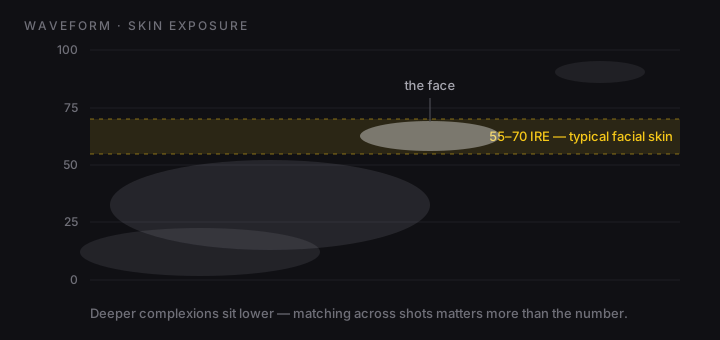
- Lighter complexions: ~55–70 IRE, the oft-quoted "70 IRE rule" being the bright end of normal.
- Medium complexions: ~45–60 IRE.
- Deeper complexions: ~30–50 IRE, and pushing them up "to hit 70" is how faces get that gray, washed-out look. Expose the face, not the rule.
Intent moves all of it: a moody night interior legitimately puts a face at 25 IRE, a high-key commercial at 75. The ranges are a sanity check, not a law.
The number that actually matters: the delta
Viewers don't know what IRE a face is at. They instantly feel a face that jumps: 48 in the wide, 63 in the close-up, and the scene stops feeling like one scene. Shot-to-shot consistency is the real deliverable; the absolute value is a creative choice you make once per scene.
How to actually measure a face
- Isolate it. A whole-frame waveform buries the face's trace in walls and wardrobe. Crop the scope input to the face, or use a region-reading tool.
- Read the forehead/cheek mass, not specular highlights (nose, forehead shine), which legitimately ride 10–20 IRE above the skin mass.
- Check it after the look. LUTs move exposure too; measure the face on the output, not the source.
ToneLoupe makes this the ambient kind of check instead of a ritual: its exposure heatmap paints the skin-target band directly on the face (false color, explained), so a face sliding out of its band changes color on screen the moment it happens, in your NLE or anywhere else on your Mac.
Exposure heatmap with the skin target on the yellow band, plus skin-line false color and live scopes, over any app.